
Conditions we help with

Plantar fasciitis relief in Tolland
Heel pain that will not settle is often about how the whole leg loads, not just the sore spot. Hands-on care in Tolland for the foot, the ankle, and everything above them.
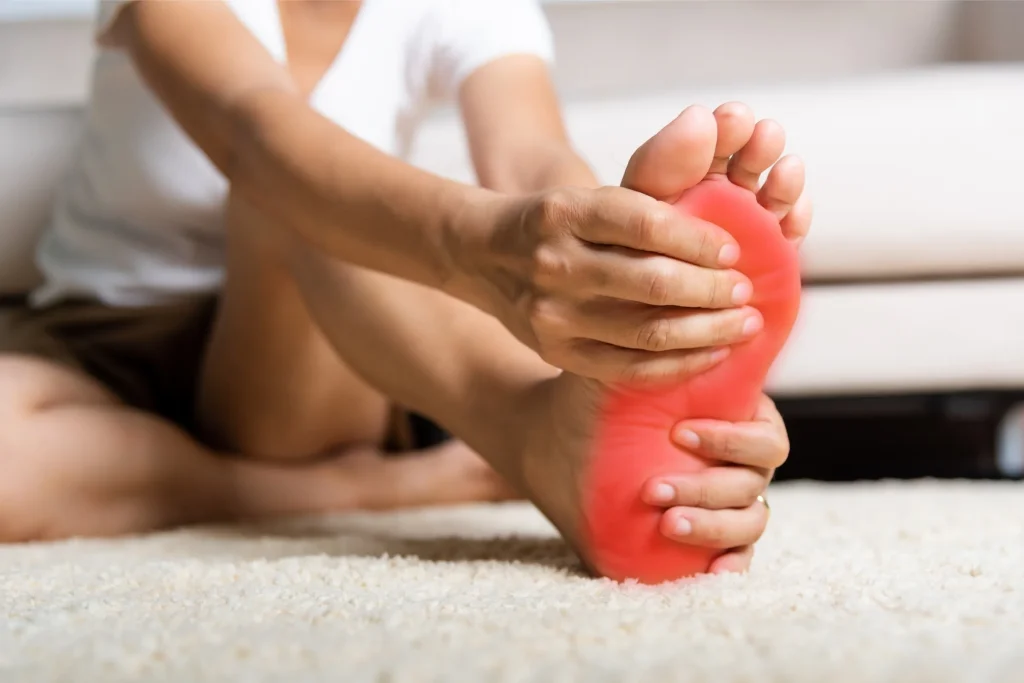
The heel and arch where plantar fasciitis pain concentrates, highlighted
⏱ Same-week new-patient visits
👐 A whole-leg look, not just the heel
📍 Serving Tolland
The short answer
Plantar fasciitis is irritation of the thick band of tissue along the sole of your foot, felt most sharply as heel pain in the first steps of the morning. Chiropractic care works on the mechanics that keep it going: restoring movement to a stiff foot and ankle, easing the tight tissue up the back of the leg, and improving how the whole leg loads with each step.
Plantar fasciitis announces itself in the first few steps out of bed, then eases, then comes back. It is stubborn, and it is very treatable, and the two facts sit together. Here is a plain-language look at what causes it, how care can help, and why the answer is rarely just about the heel.

What causes plantar fasciitis?

The plantar fascia is a strong band of tissue running along the sole of your foot, from the heel to the toes, and it supports the arch every time you stand and walk. Plantar fasciitis is what happens when that band gets overloaded and irritated, usually where it attaches at the heel. The sharp first-step pain is the classic sign, and it often comes back after any long sit before easing as you move.
The usual contributors we see in Tolland:
  • A stiff ankle or foot that does not move well, loading the fascia harder.
  • Tight calves and the tissue up the back of the leg, which pull on the heel.
  • A sudden jump in standing, walking, or running load.
  • Footwear with little support, or long days on hard floors.
  • How the whole leg loads, from the hip down, changing the strain on the foot.
Some heel pain is not plantar fasciitis, and part of a good first visit is checking. Numbness or tingling in the foot, pain that followed a specific injury, or a heel that is hot and swollen points elsewhere and may need a different work-up. We will tell you if that is what we find.

How does chiropractic care help with plantar fasciitis?

Chiropractic care works on the mechanics that keep the fascia overloaded. Gentle, specific adjustments restore movement to a stiff foot and ankle, hands-on work releases the tight tissue up the back of the leg that pulls on the heel, and we look at how the whole leg loads from the hip down. Take the mechanical load off the fascia and it gets the chance to settle that it has not been getting.
In practice, a course of care usually blends a few things:
  • Adjustments to restore movement to the foot and ankle, matched in force to your body.
  • Soft-tissue work through the calf, the arch, and the tissue up the back of the leg.
  • Targeted stretching and loading of the fascia and calf that you do at home.
  • Practical changes to footwear, standing load, and how quickly you ramp activity.
The goal is not a lifetime of visits. It is to settle this episode and address the mechanics feeding it, then leave you with the movement and habits to keep the heel quiet.

What does care cost, and do you take insurance?

No referral is needed to book, and we are happy to check your benefits for you before your first visit so there are no surprises. Costs depend on your plan and what your foot needs, and we will always walk you through it in plain numbers first.
  • No referral needed to book a first visit.
  • We verify your benefits for you ahead of time, so you know what to expect.
  • Clear, up-front pricing if you are paying out of pocket, with no packages you did not ask for.
We cannot promise a specific outcome or what your insurance will cover; every plan and every foot is different. What we can promise is an honest look and a straight answer.

Almost always improves Plantar fasciitis pain almost always improves without surgery, according to the U.S. National Library of Medicine's MedlinePlus, whose list of nonsurgical options runs to boot casts, custom orthotics and steroid injections. It is one of the most common foot complaints there is, and one of the most reliably workable, which is worth holding onto when you are three weeks into stubborn heel pain.

Source: U.S. National Library of Medicine, MedlinePlus Medical Encyclopedia: Plantar fasciitis. medlineplus.gov

The first steps do not have to stop your morning.

Same-week visits for new patients. Come as you are, we will take it from there.

Plantar fasciitis questions we hear most

For most people with common plantar fasciitis, gentle chiropractic care has a strong safety record, and it is matched in force to a sore foot. The first visit is a careful history and check, partly to confirm the heel pain is plantar fasciitis and not something that looks like it. If your exam points elsewhere, we will tell you.

Because the heel is usually paying for what is happening around it. A stiff ankle and a tight calf pull hard on the fascia at the heel, and how the whole leg loads changes the strain on the foot. Working only the sore spot is why plantar fasciitis so often drags on; addressing the mechanics above it is how it settles.

Many people notice the first-step pain easing within a few weeks, though plantar fasciitis is genuinely stubborn and it is honest to say it can take longer. Consistency with the home stretches and load changes makes a real difference. After your first visit we will give you a realistic window rather than a guess.

Sometimes supportive footwear or an insert helps take load off the fascia, and sometimes the bigger wins are in ankle movement, calf flexibility, and how you ramp your activity. We will give you practical, specific guidance rather than sending you straight to an expensive shelf, and point you toward orthotics only if your foot actually needs them.

Ease off the sudden increases in standing or running that set it off, stretch the calf and the sole of the foot gently through the day, and support the foot rather than going barefoot on hard floors. A gentle roll of the arch over a cold bottle helps many people in the morning. If the heel is hot and swollen or the foot is numb, get it checked rather than assuming it is plantar fasciitis.
You might also look at

Knee pain

The knee above, which changes how the foot loads and is loaded.

Hip pain

The top of the chain that sets how the whole leg lands.

Sports injury

The training ramps that heels tend to protest first.
Cutting Edge Chiropractic
Ready to get started?
Book An Appointment
Call us at (860) 454-0942 or book your first visit online.
Cutting Edge Chiropractic center

387 Merrow Road
Tolland, CT, 06084

HOURS
Monday
8:00am – 12:00pm, 1:00pm – 6:00pm
Tuesday
8:30am – 6:00pm
Wednesday
8:00am – 6:00pm
Thursday
8:30am – 6:00pm
Friday
8:00am – 12:00pm
Saturday
Closed
Sunday
Closed
LOCATIONS
Copyright © 2026 Cutting Edge Chiropractic. All Rights Reserved.